
Prontal
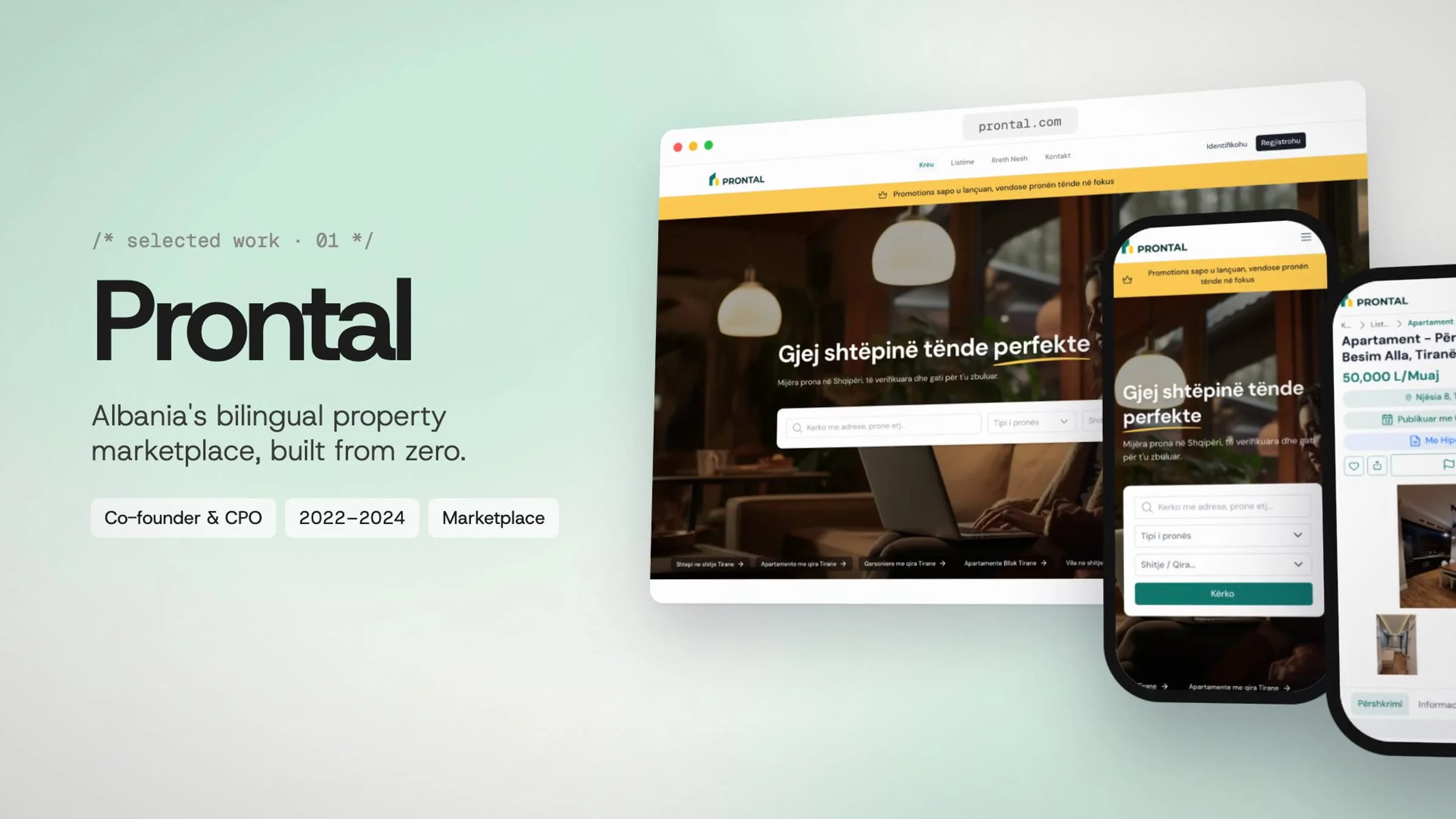
Albania's bilingual property marketplace, built from zero: search, a listing wizard, agency teams, and a coin model that pays for it.
- Role
- Co-founder & CPO
- Period
- 2025–now
- Platform
- Web, responsive, SQ / EN
- Live
- prontal.com ↗
The problem
Owners and agencies needed to list a property in minutes and reach serious buyers. Buyers needed listings they could actually compare, in Albanian first.
What I did
Co-founded the company and led product and design end to end: information architecture, search, the listing wizard, agency teams, monetization and the design system.
The result
A rebuilt platform with the old users migrated across, covering 62 cities and districts.
Four calls that shaped the product, and what each one cost.
Coins instead of subscriptions
One coin is one euro. Sellers spend them per day on Plus (1.5) or Premium (2.5) placement, bumps and add-ons, with 10–20% off bigger packs.
- tradeoff
- Less predictable revenue than a monthly plan.
- why
- Most sellers list occasionally. Paying only for visibility you use lowers the barrier for private owners and small agencies.
Top up without losing your work
Running out of coins mid-promotion opens a top-up right there, and warns before unsaved changes would be lost.
- tradeoff
- More states to design and test than a plain redirect to a store page.
- why
- The moment someone runs out of coins is the moment they are most ready to pay. Losing their listing there would lose the sale.
Curated city pages, not infinite filter URLs
Pages like “apartments for rent in Tirana” are indexable landing pages. Any other filter combination points search engines back to /search.
- tradeoff
- Long-tail filter pages never rank on their own.
- why
- Thousands of near-duplicate pages dilute a young site. A short list of real searches, by city and neighbourhood, earns the traffic.
Albanian first, one URL per page
Every first visit opens in Albanian, whatever the browser says. Switching to English is remembered without changing the address.
- tradeoff
- No separate English URLs for search engines.
- why
- The market is local. A listing link shared on WhatsApp should look the same for everyone who opens it.
From the first search to the agent’s phone number.
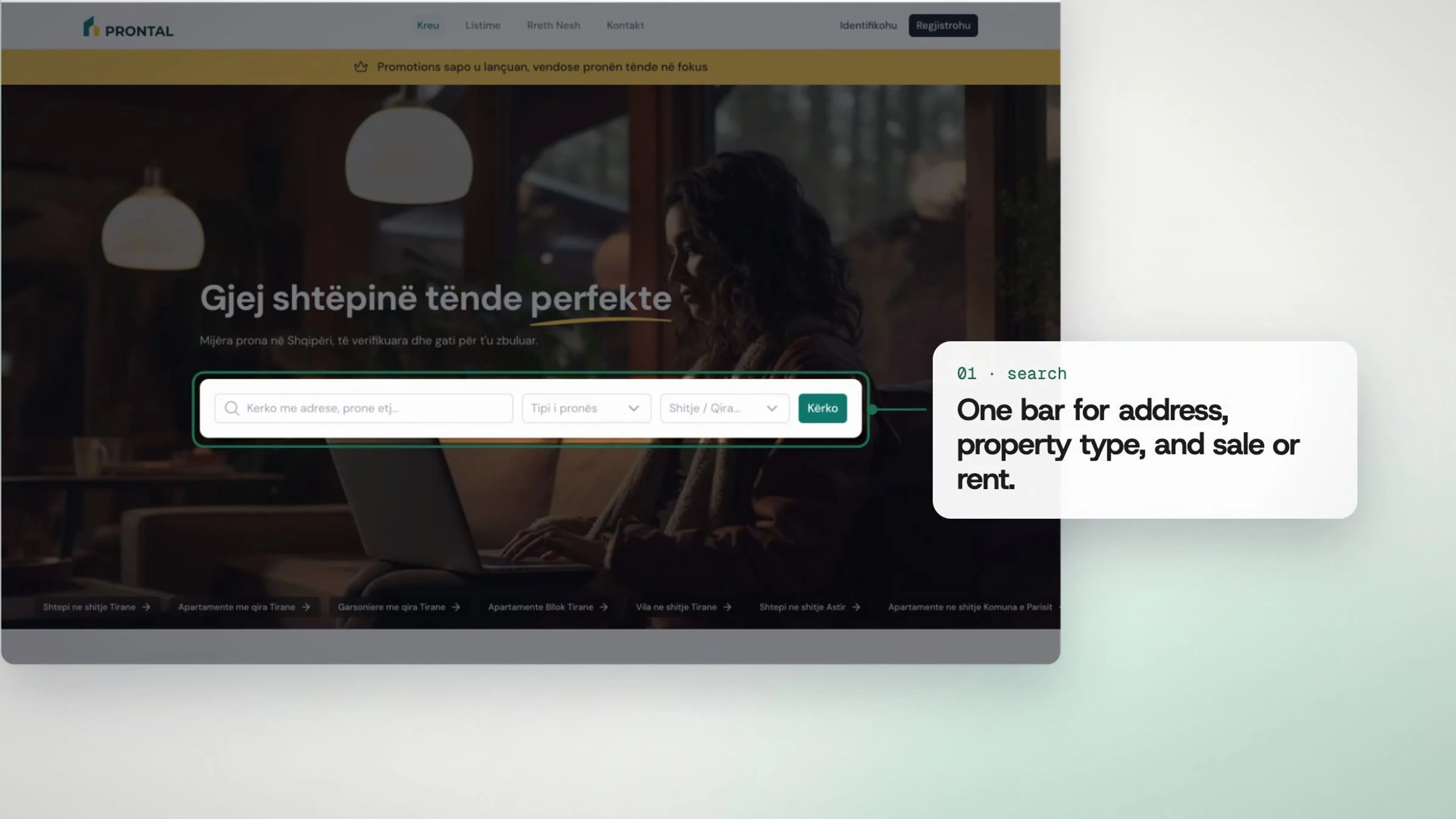
One bar for address, property type, and sale or rent.
Most visits start with a place, so the place is the first field. Type and deal narrow it without opening a filter panel.

Popular searches by city and neighbourhood, one tap away.
The same curated pages that rank in search double as quick starts on the homepage.
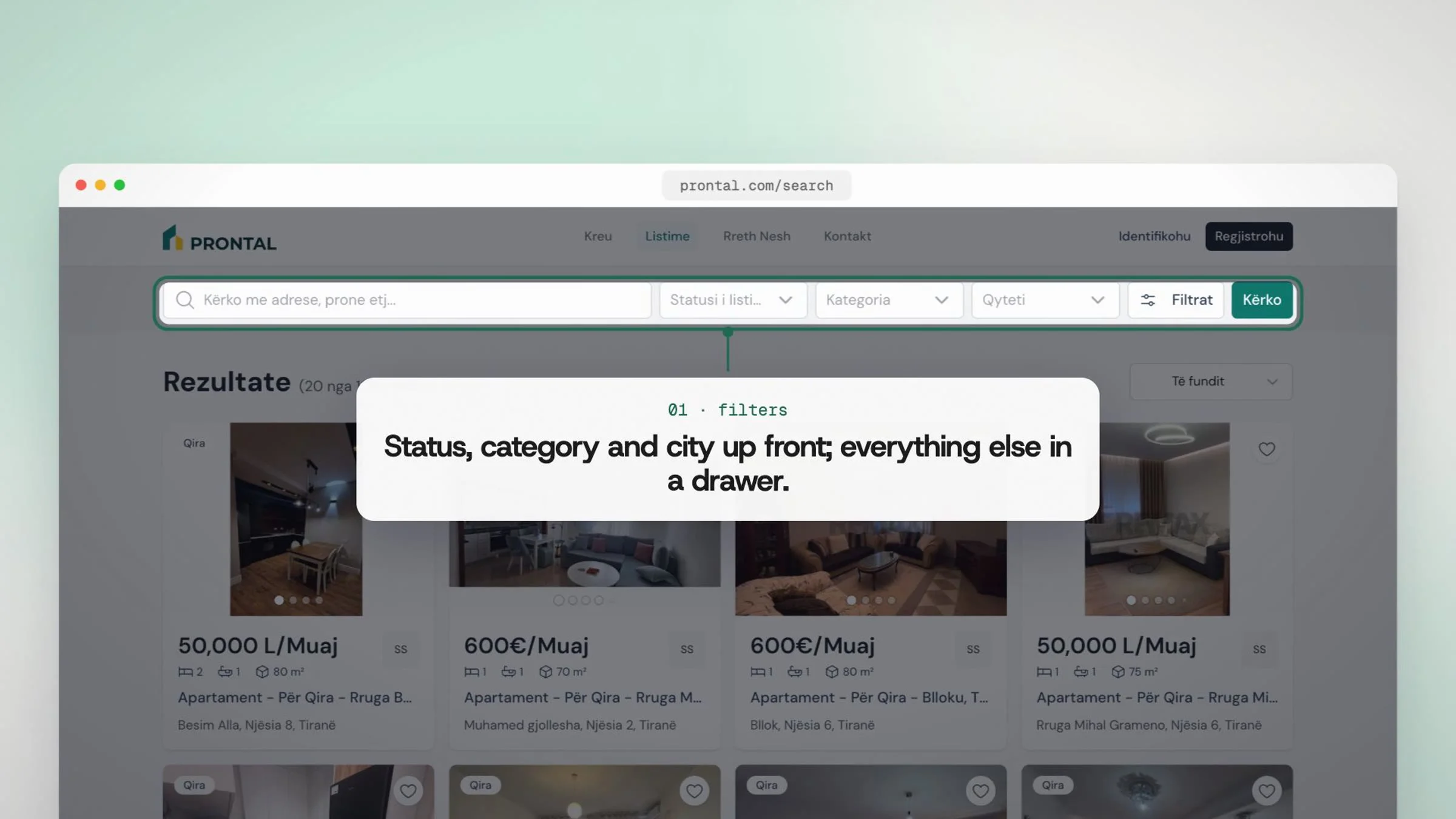
Status, category and city up front; everything else in a drawer.
Each property type only shows the fields that apply to it.
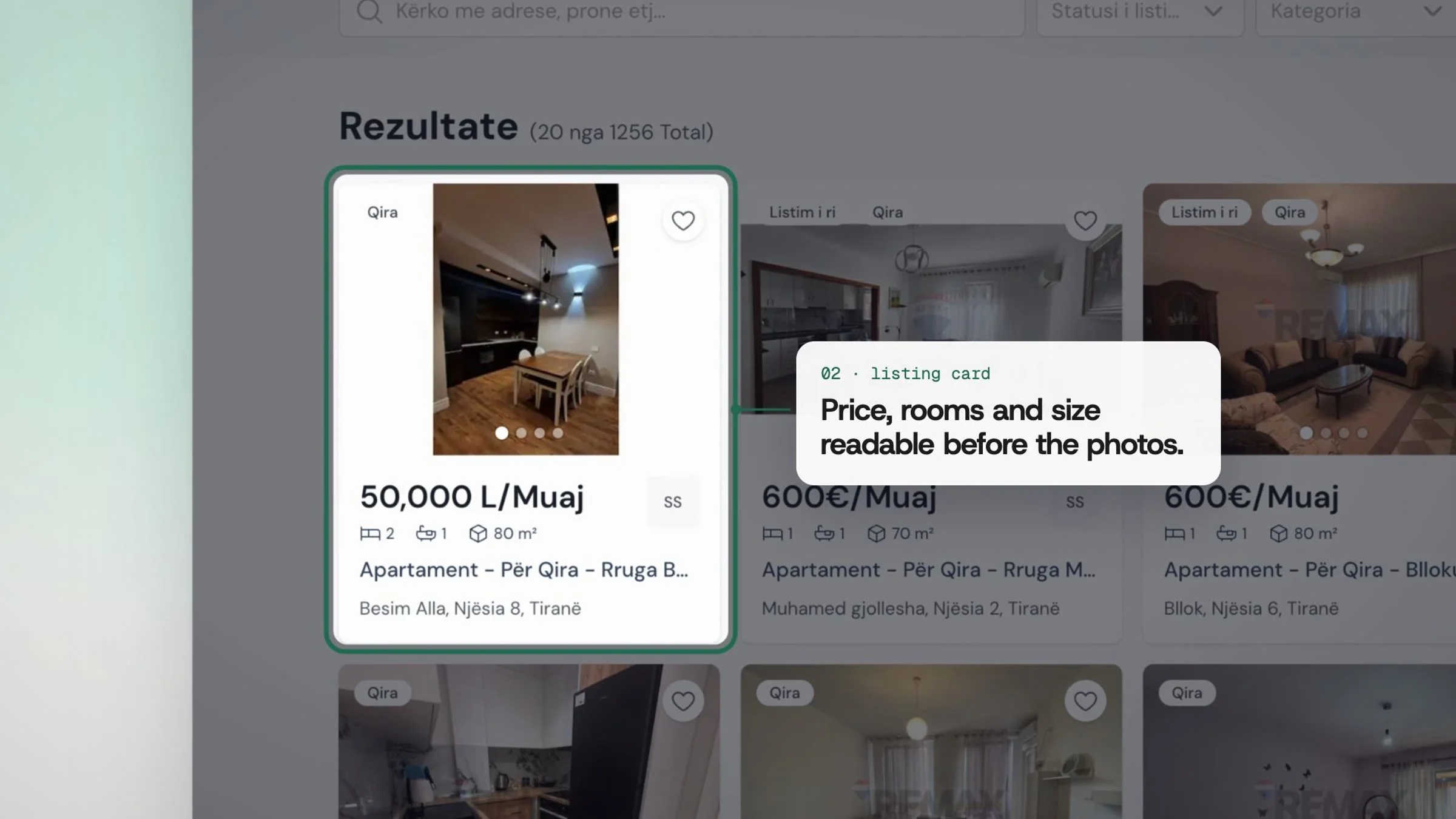
Price, rooms and size readable before the photos.
Cards lead with the facts people compare, so scanning a results page is fast.
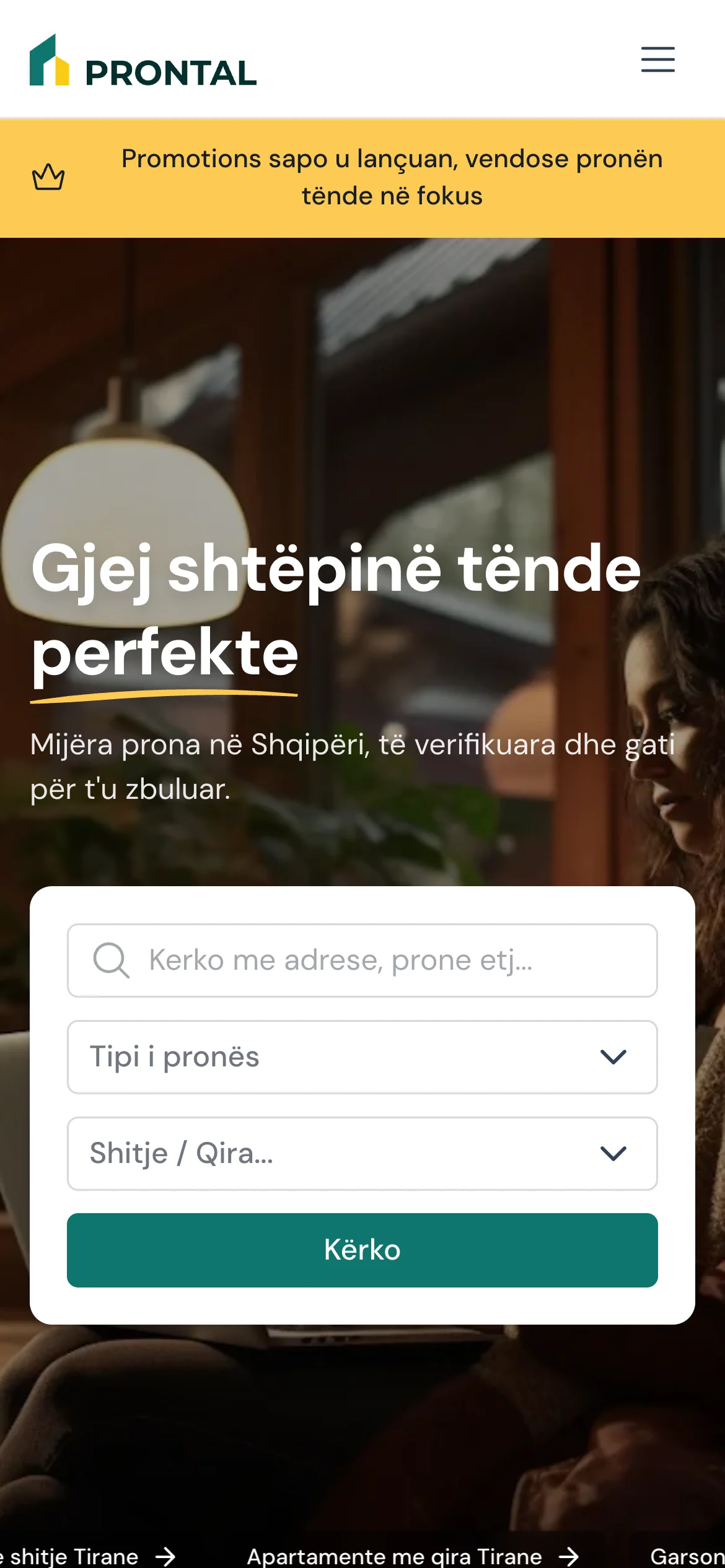
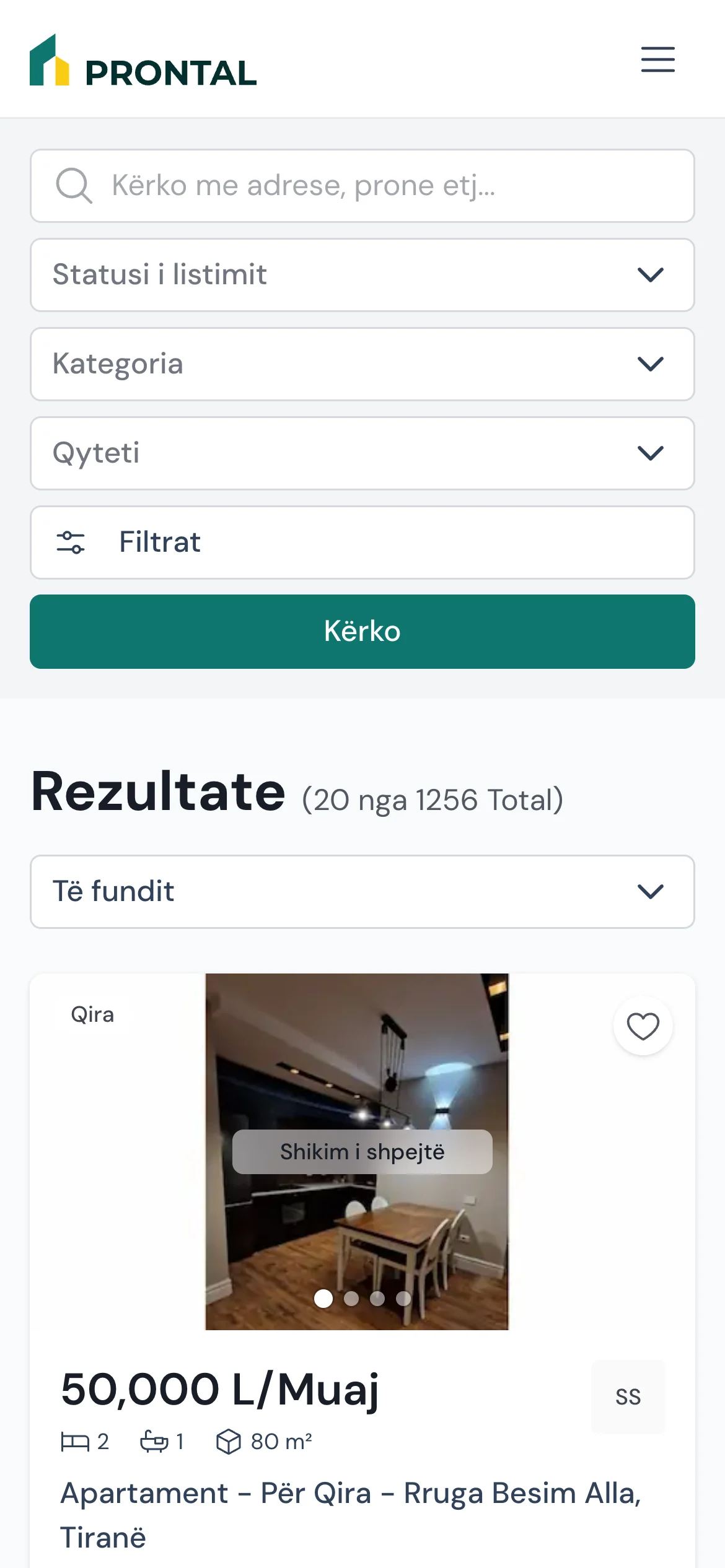
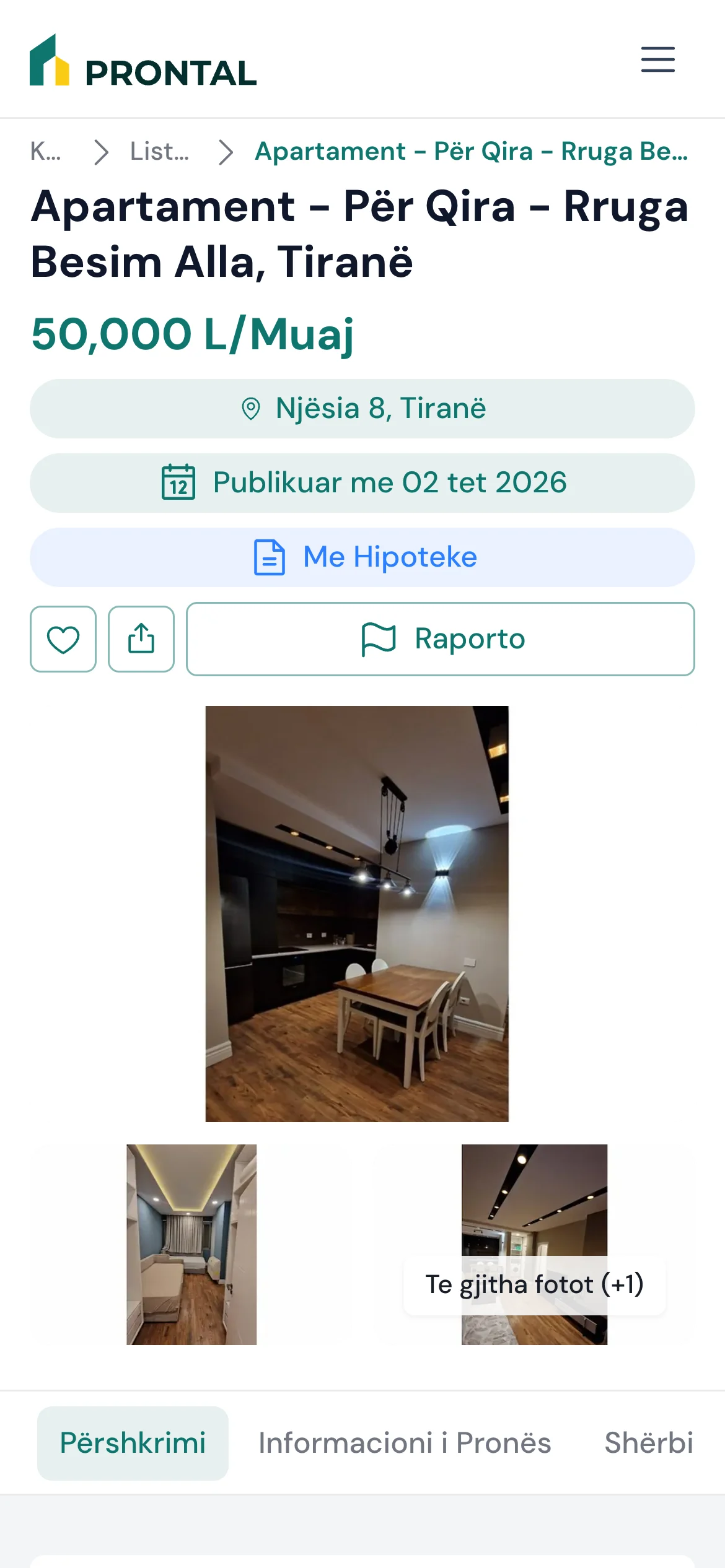
Mobile: the same model and the same order of information on a phone.
BeeTrend →
Content intelligence for short-form creators: it finds the videos that beat their creator’s own normal, explains why, and renders your next post.